Tangible Marketing in Our Age of Everything-Digital

It is personal, it is tangible, it is targeted and it is memorable!

What is tangible marketing? In a nutshell, it’s the use of physical objects to communicate a message or promote a product or service.

There are several reasons why tangible marketing is such a great tool.

#1. It grabs people’s attention. We live in a world where most of our communication is digital, so when we see something physical, it stands out.

#2. It creates a connection between the customer and the brand. By giving people a physical object to interact with, you create an opportunity for them to learn more about your company and what it represents.

#3. It helps people remember your brand. Studies have shown that when people interact with a physical object, they’re more likely to remember the message or product it promotes.

A typical business person receives more than 100 emails a day, which can make it difficult to have a real impact when using only digital outreach (many cold outreach emails get filtered or go to spam!). In our age of digital communication and information sharing, receiving a special package in the regular is rare and so, it grabs attention: no wonder that direct mail has a better open rate than email.

MailChimp Holiday Socks tangible marketing example

According to the Data & Marketing Association, “The average B2B direct mail open rate is 21%, compared to just 2-5% for email.” So, if you want to maximize the number of people who hear your message, direct mail is the way to go!

Like in our personal life, an emotional response keeps the message and the messenger in the receiver’s mind. Receiving a nice gift right at your desk in the middle of the work week is memorable, and shows that the sender made the effort to do something different.

Chubby Gorilla’s Sample Kit

There are many different goals your company can accomplish with tangible marketing:

• To build brand awareness
• To warm up cold leads
• To invite to connect (webinars, stopping by the booth at a show, etc.)
• To reactivate lost opportunities
• To follow-up after an event/connection made

It is personal, it is tangible, it is targeted and it is memorable!

The Hottest Marketing Tool in 2023

Of the multitude of tools available to the modern marketer, video content is winning, hands down.
Video marketing, being the highest ROI marketing tool, has become absolutely essential for brands, regardless whether it is a consumer or a B2B brand. Not surprisingly, the short-form video has seen the most growth in 2023. Any video that is under 60 seconds long is a short-form video. Currently more than 90% of marketers are using this tool and some studies show that this number is growing (source: HubSpot report on Marketing trends).

Companies are using video content for several different reasons: to create brand awareness, to generate quality leads, to keep customers engaged and interested, to educate, and to convert leads into revenue stream. Before developing a video content strategy, companies must be clear about what they are trying to accomplish.

From the platform stand point, the most used platforms are YouTube Shorts and Instagram Reels, and for consumer brands TikTok became an irreplaceable loud speaker … no wonder that every other SM platform is trying to replicate its successes. Based on the recent report by HubSpot, 42% of marketers are using TikTok already, and more than half of them planned to increase their investment into this platform in 2023, which is the higher of any platform.

Consider these statistics:

73% of consumers prefer to watch a short-form video to learn about a product or service.
• 59% of short-form videos are watched for 41-80% of their length, while 30% of them have an average watch rate of over 81%.
Short-form video will see the most growth among different marketing strategies in 2023, with marketers planning to invest more in it than any other formats or tactics. In particular, 21% of marketers plan to tap into short-form video for the first time in 2023.

If you need more convincing about the value of the short-form video, take a read of the blog by The Leap.

AI USE IN 2023 AND FUTURE OUTLOOK FOR MARKETING AND NEW PRODUCT DEVELOPMENT PROFESSIONALS

In the recent April 2023 survey, McKinsey reported a robust adoption of the AI technology for a number of functions, but marketing, sales and product development were listed as at the top of the most commonly spaces using generative AI.

Looking at the search traffic and a multitude of studies, including one by Goldman Sacks predicting upward of 300 million jobs lost or diminished due to AI, we all should expect a major disruption in our industries, jobs and even personal lives due to this new technology. However, it appears as though the service-based businesses will experience a much faster change and impact on the human capital.

The prediction is that among functions that will be most impacted are product development, marketing, strategy and finance. Manufacturing sector will most probably have a slower adoption rate, but eventually even that segment will be transformed by the generative AI capabilities. Retooling of the workforce is under way, and if you are one of the professionals who may be impacted soon, it is wise to look at how you can upgrade your skills to fit into the new pattern of business.
Additional reading:

Sage article

McKinsey report April 2023

Artificial Intelligence & Marketing

Artificial intelligence (AI) is becoming an essential tool in modern marketing techniques. From analyzing customer behavior to creating personalized content, AI is transforming the way marketers engage with their audiences. This article summarizes how AI can be used in modern marketing techniques.

  1. Customer segmentation

One of the biggest challenges in marketing is to understand your target audience. With AI, marketers can easily segment their audience based on demographic, geographic, psychographic, and behavioral data. AI algorithms can analyze large datasets to identify patterns and predict future behavior, allowing marketers to create more targeted campaigns that are tailored to individual customers’ needs and preferences.

  1. Personalization

AI can help create personalized content and recommendations based on individual customer data. For example, an e-commerce site can use AI to recommend products based on a customer’s previous purchases or browsing history. This personalized approach can improve customer experience and increase customer loyalty, while increasing the company revenue share.

  1. Chatbots

Chatbots are AI-powered programs that can simulate human conversation. They are becoming increasingly popular in keeping the audience engaged. Chatbots can quickly answer customer queries, provide product recommendations, and even process orders. They are available 24/7, which means that customers can get help even outside business hours. Albeit more limited in the type of questions that a chatbot currently can answer, with time and machine learning the answers will become more comprehensive, accurate, and available for more complex questions.

  1. Predictive analytics

AI can be used to predict customer behavior and identify opportunities for growth. By analyzing customer data, AI can predict which customers are likely to purchase a particular product or service, allowing marketers to create targeted campaigns to convert these customers. Predictive analytics can also identify customers who are at risk of churning and create retention campaigns to retain them.

  1. Content creation

AI can be used to create personalized content at scale. For example, AI can generate social media posts, product descriptions, and even blog articles. This approach can save marketers time and resources and ensure that the content is tailored to the audience’s interests.

  1. Image and video recognition

AI can be used to analyze images and videos to identify brand logos, products, and even people. This approach can help marketers track brand mentions and monitor social media activity. It can also be used to identify influencers who are using the brand’s products.

As AI technology continues to improve, we can expect to see even more innovative ways in which it is used in marketing. While many organizations have not yet embraced AI, the prediction is that in the course of the next 2-3 years, AI marketing tools will be ubiquitous, and human marketers will need to find ways to stay relevant in our evolving brave new world.  

(Written by AI, edited by Anna Frolova-Levi)

To Think or Not To Think …

Although it feels that our economy is back to normal and advancing at an expected, somewhat slow pace, certainty of the future growth is most probably misplaced. Given the global tensions and ever-speeding technological developments, our world the way we know it will most probably change not even 5 years from now … and coming changes may not be the familiar, evolutionary in nature, but more transformational and abrupt.

So if we assume that we, as a society, stand at a major fold that will transform our ways of life, can we risk assuming that businesses can go on making their products, offering their services and thinking about the future in the same way they did in their past?

How important then it is to peer into the future and create different scenarios of probable conditions (assumptions) that will lead to changes in your business strategy?

Here are a few examples from the past when businesses short-sightedly made a decision without considering possible scenarios:

We’re a serious business, thank you very much.  In 1876, William Orten was President of Western Union, which had a monopoly on the most advanced communications technology available, the telegraph. Orten was offered the patent on a new invention, the telephone, for $100,000 (worth about $2M in current dollars). He considered the whole idea ridiculous, and wrote directly to Alexander Graham Bell, saying, ”After careful consideration of your invention, while it is a very interesting novelty, we have come to the conclusion that it has no commercial possibilities… What use could this company make of an electrical toy?” Two years later, after the telephone began to take off, Orten realized the magnitude of his mistake, and spent years (unsuccessfully) challenging Bell’s patents.

Say cheese! The Eastman Kodak company developed the first digital camera in 1975, then proceeded to sit on it (and the core technology for the cell phone, as well).  They decided not to develop it because they were afraid it would cannibalize  their film business (at one point they had a 90% share of the US film market.)

[source: It Seemed Like A Good Idea At The Time, Forbes.com, by Erica Andersen]

And here is a great article on why considering at least 4 different scenarios in business decision making is so important … The Use and Abuse of Scenarios

Packaging Choices Today

No matter what industry your company belongs to, as long as your product requires a package, you will always pay attention to the innovative packaging alternatives … and nowadays, there are many new, emerging technologies to consider before going to a well-accepted package, traditionally used in your industry.

By far, the most talked about trend in packaging is sustainability. Guess what people think immediately when they hear “environmentally unfriendly?”: plastic, over-packaged products, landfills overflowing with all types of throw-away packages, maybe “Great Pacific garbage patch …”

Packaging industry came back with all sorts of interesting solutions that will help address the uneasy feeling of general public about packaging. Here are a few snippets of what’s available to an out-of-the-box thinking packaging professional.

Plastic, but so much less of it!

Reduced use of plastic while providing robust protection for the product inside is this technology unique advantage.

less plastic material, sustainable package, light-weighted package
Light-weighted package

This light-weighted design allows for reduction in total package cost, mostly due to less raw materials used and lower shipping costs: this design, besides being light, is also stackable contributing to fuel saved and less waste thrown into the landfill. Take a look at this technology: http://www.ipl-plastics.com/skinnypack-technology/en

Consumable Packaging

Yes, it is possible if you are adventurous enough to have the package and eat it too. Talking about the minimalistic approach to packaging: a team of scientists figured out how to package food into a package that stays intact long enough to get through the distribution system, but dissolves when consumed by a human (or another animal). The packaging, created by researchers in France led by Dr. David Edwards, is called WikiCells. It’s designed to imitate how fruit and vegetables are ‘packaged’ in nature with a protective outer layer or skin you can eat.

Edible Packaging
Edible Packaging

‘The idea was to use the model of how nature wraps foods,’ said Dr. Edwards, a professor from Harvard. ‘It is a completely new way of packaging and eating.’ He has developed a range of yoghurt pots, juice cartons, water bottles and ice cream containers that mimic natural packaging by enclosing food and liquid in an edible membrane. Read more: http://www.dailymail.co.uk/news/article-2160092/Packaging-eat-Food-skins-mimic-nature-slash-plastic-waste.html#ixzz3aGGksaFD

Think about the reduction of waste and savings on transportation costs! Unbelievable development! The only additional greenhouse effect will be what a body produces once the package gets processed through our digestive system. Caveat: convince your customer that it is perfectly safe!

Paper, not Plastic

For many centuries, humans used paper as a primary packaging material. I remember when being a child, my mother using newspaper to pack our lunches … or an old lady around the corner selling pumpkin seeds in a hand-made paper cone …

Eco Package
Eco Package

Well, as they say, “new is a well-forgotten old.” The paper is back!

Take a look at a variety of creative solutions that the packaging industry is putting forward, some of them can contain and protect not only dry, but also liquid products! http://www.ecologicbrands.com

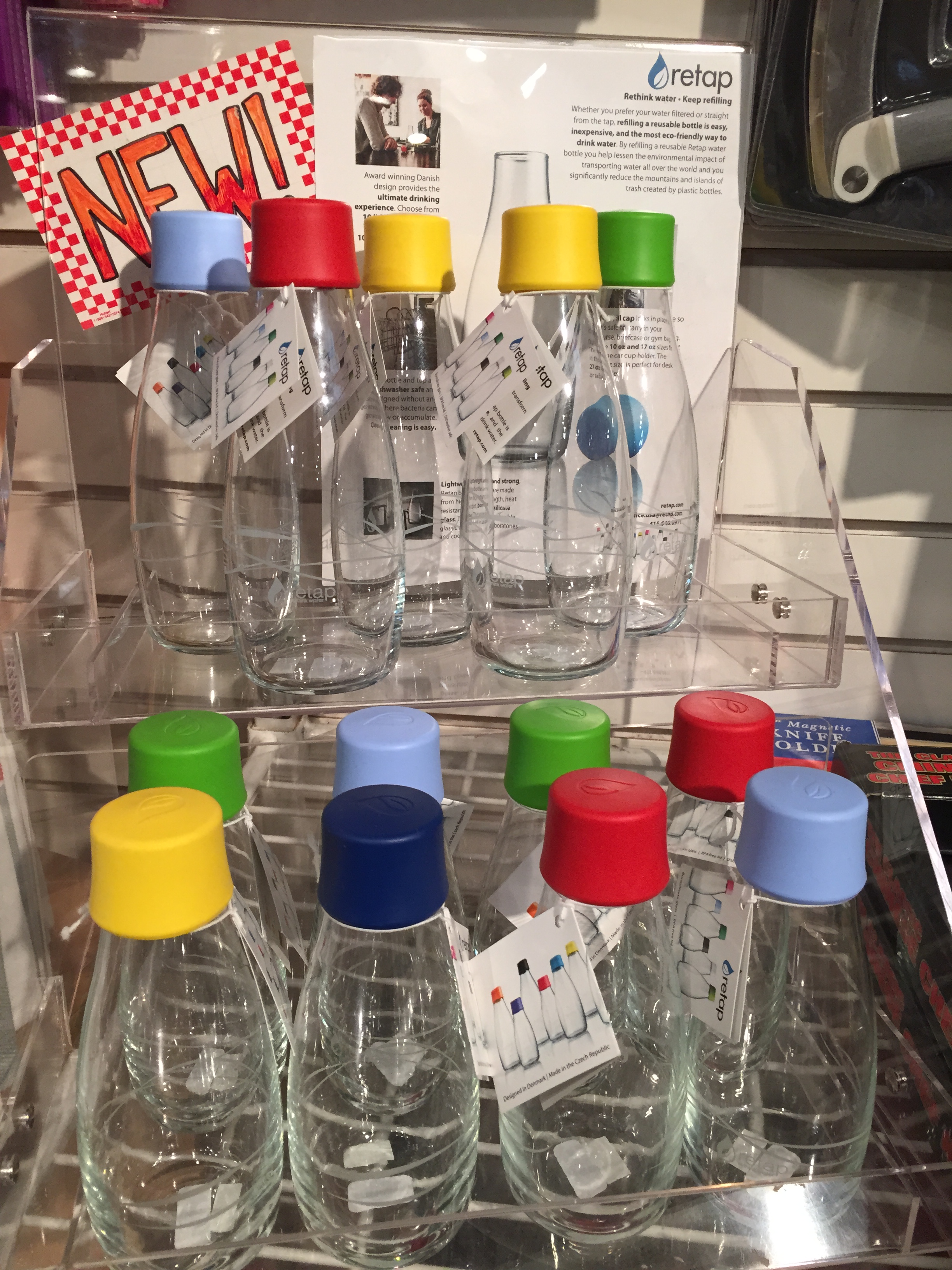
Reusable Packaging … and of course, there is nothing like putting that flip-top cap that you purchased years ago with one of the vitamin products on another bottle that does not have the dispensing convenience.

Reusable Package
Reusable Package

Different reuses of packages

Most of the rigid packages can survive several life cycles before losing its functionality. The resilient “use-your-own-water-bottle” movement that started in California is a great proof of our society’s ability to reduce the waste by reusing what we’ve got!

What is Go-To-Market Strategy?

If go-to-market (GTM) strategy sounds intimidating to you, you are not the only one in the business world who feels that way. GTM strategy is a concept perfected by big-name consulting firms with major resources devoted to outlining, explaining, researching, and developing its different models. As far as mid-market companies and smaller organizations are concerned, GTM strategy stayed in an intimidating realm of very sophisticated and resource-intensive projects with questionable success at the implementation stage.

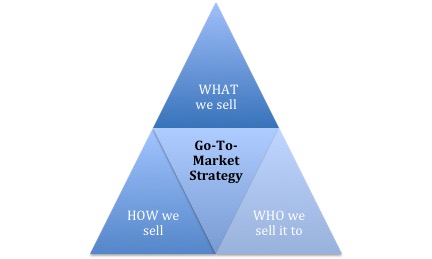
The truth is GTM strategy is much simpler than imagined by many: it is a structure around activities conducted by certain participants (channels) connecting products and services to customers. In its simplest definition GTM strategy is an approach agreed upon the decision makers in a given company on WHAT they will sell, to WHOM and HOW (how the audience will be reached). Often in academia, it is defined by a simple triangle that looks something like this:

GTM Strategy triangle

To answer What, How and Who questions, it is reasonable to assume that research needs to be conducted to uncover the answers. However, the research does not necessary need to be complex or expensive. If I could summarize in 5 sentences the type of research questions a company should focus when defining its GTM strategy, it would read as follows:

• First, let’s define what is unique about us as a company that nobody else or a rare competitor can replicate. (as you may see, this will require a pretty deep understanding of our competences and our competition)

• Next, let’s understand what market segments and what type of companies within these segments benefit the most from this unique value proposition.

• As we start learning about our best target audience, let’s get very familiar with their path-to-purchase-decision process and specific needs that this audience has.

• As a follow-up on this, let’s be frank with ourselves, and compare whether our current products, services and distribution channels match the peculiarities of our target audience’s processes and needs. (here lies our chance for product/service improvements and new product development ideas!)

• And finally, combine all the learning from prior steps into a simple approach that makes sense to ALL: our target audience, all participants in marketing, selling, and developing-new-product processes, and all the rest of stakeholders who have keen interest in the company’s success!

One very important question (often ignored) that an executive team needs to answer before engaging into defining the strategy is who will be championing the project and the implementation of strategy once the visionary and research parts of the project are completed. It is important, because while solid, unbiased information is vital in making decisions on what you will offer to which market segments, with what type of message and through what kind of channels, the success of your strategy will always depend on who will be responsible for implementing it.

A dedicated team of champions, and ideally cross-functional team, takes the strategy, which is yet an unrealized possibility, and turns it into a systematic way of conducting business that brings victory every time, many times! Needless to say that early participation in the project by this cross-functional team is detrimental to its future success. So is a consistent support by the company’s executives.

Marketing, if available as a resource, can play a leading role in the development of GTM strategy. This business function is responsible and comfortable with stretching the boundaries, asking deeper questions, going beyond the norm. The boundaries of the GTM strategy run across functional lines inside an organization, but marketing is well positioned to lead its creation and implementation: marketing interaction with two other functions in a company makes it a perfect intermediary in this process. First, marketing interacts with product development via product marketing to convey market requirements, to test target market acceptance, and to manage entire product life-cycle. Besides product management, marketing also interacts with sales by providing content for communications and sales tools, building demand and generating lead pipeline.

Developing GTM strategy can be a culture-changing undertaking that will require commitment of the entire organization from senior executive team to the customer-service representative, but it does not have to be complex. To prove the new strategy successful it is important to focus on one or two core issues and not spread resources too thin. Once it is a success, adapting it as a way of doing business will be easy!

Philosophical Thoughts on Unanswered Questions of Marketing: How to Price a New Product?

Thinker by Rodin

A friend of mine who goes by pen-name of Prodicus and who also has many more years of giving wise advice to all sorts of companies, has recently engaged me into a discourse on how human nature is impacting business decision-making. I decided, with his permission, to publish these thoughts in my blog. The first “unanswered question of marketing” deals with the question of pricing new product. All companies, no matter what size or industry, will deal with this question at least once in their existence. Here are a few insights on how to think about this challenge.

Have we ever underpriced our product?

Product Manager (PM): “I am happy to report that we have wrapped up our market study on the QX product. The research reaffirms our initial analysis that we have a sure-fire winner. The QX far outperforms the competitors’ products currently on the market, and our R&D department seems confident that we will have a defensible patent.”

General Manager (GM): “Finally some good news! You chaps have been working on the QX for a year and a half. Give me a quick snapshot of the market conditions and economics of QX.”

PM: “Well, there are three competitors currently that are producing the incumbent product that QX will take on. All three are comparable products and priced within pennies of each other. One competitor has about 60% market share, and the balance is split between the other two. We estimate the market for QX to be around $65 million, with the current product selling for about $6.15/lb.”

GM: “Sounds like a nice sized market. What is the value proposition for QX?”

PM: “QX can replace the competitive products, and in addition demonstrate two additional benefits to the customer. One, the customer will realize significant fuel savings by switching to QX. We have estimated these savings at $2.88/lb of material used. Two, the customer will no longer need to use an additive that he currently uses. Our research tells us that on the average the customer would save $1.19 in additive costs, per lb of QX used. And to top it off, we see no significant technical impediments for QX to replace the current material being used.”

GM: “And what are you proposing as our introductory price?”

PM: “I am still in discussions with sales, and the folks in production. We seem to be converging on an introductory price of $5.99/lb.”

GM: “Why?”

PM: “Sales thinks staying just under the competitor’s price of $6.15/lb will get the customer’s attention. Our cost figures have come in at $4/lb. At $5.99/lb we clear a tidy 50% gross margin, well above our corporate hurdle rate of 35%.”

GM: “Are we underpricing the QX? It seems capable of creating a great deal of value for the customer.”

PM: “I don’t think so. We are coming in just below the price in the market and we have the cost position to justify it.”

GM: “Still, I feel we are leaving money on the table and will never know how much we could have charged.”

This conversation while hypothetical is not at all uncommon in B2B settings. To better understand the GM’s concern with leaving money on the table put yourself in the role of the PM.

The choice a PM is faced with is to go either for a sure thing, in this case a price below the competitor’s offering coupled with a value proposition that saves the customer $4.07/lb ($2.88+1.19) in other savings. Or, to be more aggressive in pricing by gunning for a higher price to justify the enhanced performance of the QX product, but run the risk that the market may not go for it. What incentive does a PM have to go with the second option? A success is a success, and a smaller success has an equally good personal payoff for the PM without the additional risk. And, who is to know that we could have had a larger (i.e., higher priced) success!

This phenomenon of minimizing personal risk in pricing decision-making is one of the thorniest issues in pricing decisions. Helping PM’s cope with this risk takes a thoughtful GM who is willing to push the PM’s reasoning and justification for a price point. In addition, for a PM to step up to a more aggressive stance on pricing decisions, the GM will need to be more open to sharing some of the risk with the PM.

Some pricing mantra’s to bear in mind:

1. While customers are quick to tell you that your prices are too high, rare is it for a customer to call to inform you that you could have charged more.

2. Increasing a price is a matter of blood, sweat and a lot of tears. So get it right the first time.

3. Post-introduction, the pressure to reduce price is relentless.

4. Your customer is not particularly interested in your costs, only in the price that they expect to pay.

5. Service, even great service, is table stakes. Don’t expect a higher price for your product because of it (at least not for any length of time).

6. Customers will not pay for performance they do not need.

7. If you have a better product, please ask for a price that is worthy of it.


Thinking in New Ways: Stretching from Probable to Possible

Thinking in new ways: can contemporary business executives bring themselves to take a risk of thinking differently? Thinking outside the box is an over-used term that often means little to business people. But in its core is the gem of ingenuity that we, human species, have: the moment we allow ourselves to think differently, to say “what if” and to take the first step towards this uncertain “new” is when the miracle of progress happens.

This way of thinking does not have to be fundamental: often, small shifts in the way we do things may bring a great series of consequences and changes. However, uncertainty is not for everybody. There is a huge risk aversion adapted by the established business world. Only the brave can cross this line and make the miracle of progress happen. The article I found on my favorite business-insights site explains more about the phenomena: http://www.mckinsey.com

How to Beat the Market …

Top-performing companies actively build a culture that’s customer-focused, managed for the long-term, creative, confident, flexible, and fast-moving. While transforming marketing and sales capabilities to drive growth is not easy, many companies have difficulty simply knowing where to start. To learn more about what McKinsey&Company proposes as strategy when building your marketing and sales capabilities, please follow the link: http://www.mckinsey.com/